Glucosil™
Antimicrobial Resistance Fighting Technology
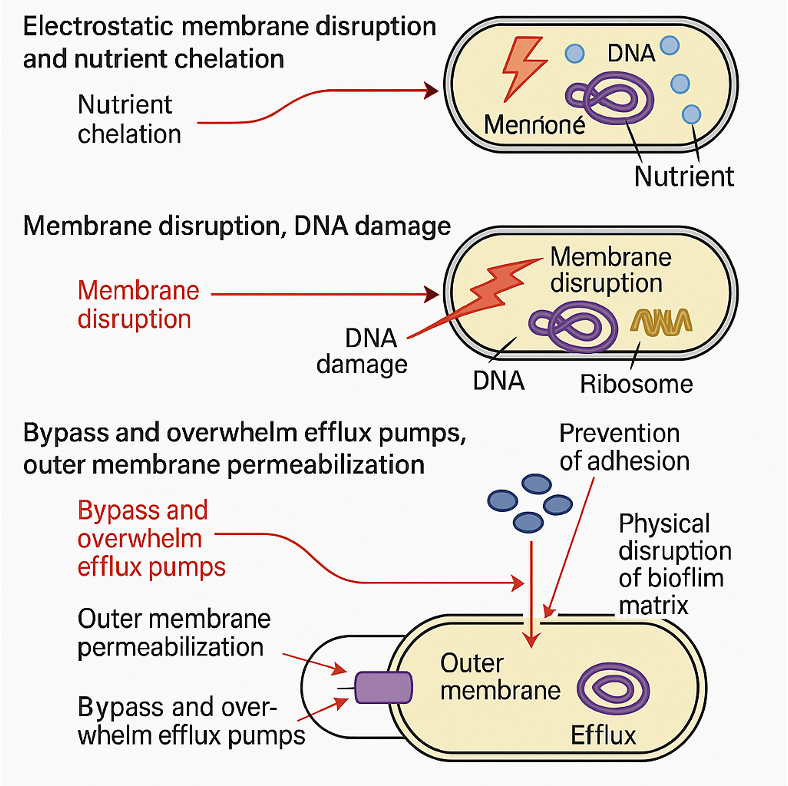
Glucosil silver chitosan attacks on bacterial cells include electrostatic disruption, membrane damage, biofilm inhibition, and oxidative/metal ion stress. These diverse targets make it much harder for bacteria to evolve effective resistance. With a multi-stage multi-modal process bacterial RNA has not been able to synthesize resistant genes. Research conducted at the Australian Institute of Microbiology and Infection at the University of Technology Sydney, validates the efficacy of Glucosil to kill multi-drug resistant pathogens while minimizing the tendency of bacteria to develop resistance.
Glucosil penetrates existing biofilm and eradicates them by killing the biofilm forming bacterial threat.
Glucosil inhibits formation of new biofilms.
Glucosil kills infectious disease causing bacteria and fungal threats and inactivates viruses listed on the CDC and World Health Organization’s reports as “Critical Threats”.
Glucosil has passed safety and toxicity studies as a minimal risk and its safety in human and animal use is supported by numerous scientific studies.


Glucosil minimizes development of bacterial and fungal resistance
A multi-stage multi-modal attack occurs upon contact.
Glucosil inhibits the development of bacterial resistance through a multifaceted and synergistic mechanism that attacks bacteria in several ways simultaneously. This approach makes it extremely difficult for bacteria to evolve a single, effective defense.
Glucosil attacks bacteria and fungi via multiple independent mechanisms
Physical disruption
Enzymatic deactivation
DNA damage
Pathogens need to develop multiple, complex resistance pathways simultaneously, which is highly improbable. This makes the development of resistance to such a compound rare and difficult.